

Curly hair can be said to have a language of its own. It forms visually distinct and structurally delicate patterns such as coils, bends, spirals, and waves. Curls, compared to straight hair, lose water faster, tangle easier, and react more to changes in the environment. Taking care of curly hair means more than just buying the right Curly hair products ; you need to learn the right technique, understand its structure, and constantly maintain it.
We’ve created this ultimate guide to help curly hair users understand their hair better and know what it takes to truly care for it. It covers the basics of curly hair such as curl types, porosity, and care routines, as well as advanced topics like products, styling methods, best products for curly hair and long-term care strategies. Various key topics related to our main ones are represented here: curly hair care routines, hair porosity care, men’s curly hair care, kids curly hair care, cultural curly care, and hair type–specific curl care for 2A, 2B, and 2C patterns.
Whether the hair is formed of loose, beachy waves, or tightly coiled curls, by following this guide, one will have a healthy, defined, and strong curls.
Table of Contents
Understanding What Makes Curly Hair Different
Curly hair is structurally different from straight hair in that curly hair strands grow in a helix formation, while straight hair grows in an even, smooth line. The shape of the curl creates tension along the shaft, which can weaken the hair and increase dryness.
In this light, there are three main issues that curly hair has to deal with:
-
Moisture retention: Natural oils struggle to move down the hair shaft.
-
Structural fragility: Bends in the strand make hair more prone to breakage.
-
Frizz formation: Humidity causes the cuticle to lift, creating frizz.
The above-mentioned problems are common to all types of curls — wavy (Type 2), curly (Type 3), and coily (Type 4), hence, curly hair demands a higher level of hydration, gentler style maintenance, and more protective styling techniques.
Identifying Curl Patterns (2A, 2B, 2C, 3A, 3B, 3C, 4A, 4B, 4C)
The categories of curl patterns are based on the shape and definition of the curls. Every curly head is, of course, different but knowing one’s curl type really helps when it comes to choosing the right products and hairstyles. To see more about Curly Hair Types
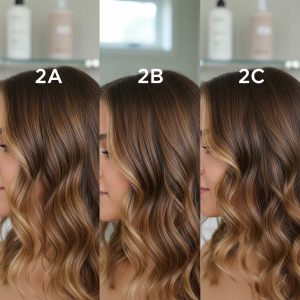
Wavy Hair (Type 2)
Waves usually form S-shaped patterns that are quite loose. These kinds of curls tend to stay pretty close to the scalp and may get weighed down if the hair is loaded with heavy products.
If one is taking care of
2A hair, they are advised to use light formulas without styling cream.
2B hair care includes the use of curl creams and light gels to enhance curl definition.
2C hair care is more about frizz control, diffusing, and hydration.
Curly Hair (Type 3)
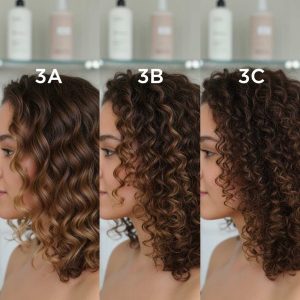
Curly hair is formed of spirals or ringlets which require constant hydration and a balance between protein and moisture to stay healthy.
3A curls are usually looser and more manageable.
3B curls are tighter, more bouncy, and have greater volume.
3C curls are densely packed and in need a serious hydration.
Coily Hair (Type 4)
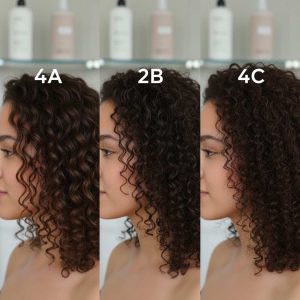
This curl type forms tight coils and zigzags. It shrinks significantly and is naturally fragile.
4A hair has a defined coil pattern.
4B hair bends in sharp angles.
4C hair is tightly coiled and delicate, needing moisture-dense routines.
Understanding curl type builds the first layer of a personalized curly hair care routine.
How Hair Porosity Affects Curly Hair Care
Hair porosity is a term used to describe the extent to which moisture can enter and be retained by the hair. In fact, many people give porosity more importance than the curl pattern.
Low Porosity Curly Hair Care
The cuticles of low porosity curls are so tightly packed that they hardly allow moisture to penetrate. Apart from that, products are mostly left on the surface rather than soaking in. This behaviour is a defining characteristic of curly hair low porosity and explains why hydration can be challenging.
Some suggestions for low porosity curly hair care are:
- Use lightweight conditioners
- Clarify regularly to prevent build-up
- Apply heat during deep conditioning
- Avoid heavy oils and butters
- Focus on water-based hydration
High Porosity Curly Hair Care
High porosity curly Hair Care can readily take in moisture but at the same time, they dry quickly. This type of hair usually comes as a result of heat damage, bleaching, or chemical processing.
Some high porosity curly hair care strategies are:
- Protein treatments
- Cream-based moisturizers
- Butters for sealing moisture
- Reduced shampoo frequency
- Protective hairstyles
How to Build a Curly Hair Care Routine
Regardless of curly hair type, porosity, and goals, the basic structure of a curly hair care routine remains the same. Typical activities on a wash day are cleansing, conditioning, moisturizing, and styling.
Step 1. Cleansing
It is important to clean the scalp regularly to get rid of sweat, build-up, and oils. Based on their lifestyle, most people with curly hair wash their hair once or twice a week.
Steer clear of shampoos that contain sulphates which dry out hair. opt for hydrating shampoos or cleansing conditioners if you want to clean hair in a gentle way.
Step 2. Conditioning
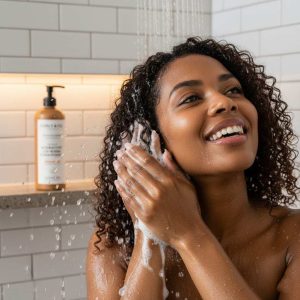
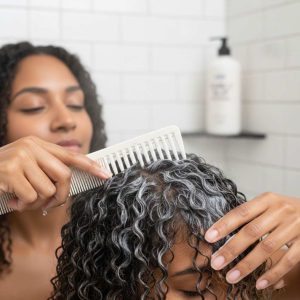
Condition hair every time it is washed. Because curly hair is more prone to tangling, conditioners with slip will help to preserve hair and thereby reduce breakage.
One can use the fingers or a wide-tooth comb for the application of the conditioner.
Step 3. Deep Conditioning
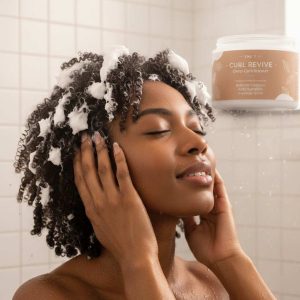
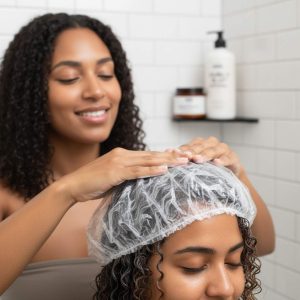
Deep conditioning is crucial for maintaining moisture and curl strength. conditioning, done once a week, has the potential of completely changing the characters of the curls from dry ones to well-defined ones.
conditioner routines work by:
- Restoring elasticity
- Adding hydration
- Improving shine
Step 4. Leave-In Conditioning
Leave-in conditioners are a bonding agent for moisture and they also keep the curls looking great. They providing great results, especially to 2C, 3B, 3C, and 4C hair types.
Step 5. Styling
Curl styling products are used for enhancing the curl pattern and consequently reducing frizz. Some of the choices are:
- Curl creams
- Mousse
- Gel
- Curl custard
Curl styling products can only be applied on hair that is dripping wet and this can be done through scrunching, raking, or finger-coiling methods.

Curly Hair Care Tips for Stronger, Healthier Hair
There are a few universal curly hair care tips that can benefit any curl type:
- Avoid brushing dry curls
- Clarify once per month
- Sleep on satin or silk
- Trim every 8–12 weeks
- Limit heat styling
- Use curl-safe accessories
- Choose water-based products
- Apply products to wet hair
These methods serve as a basis for any curly hair care schedule and support the holding of the curl shape over time.
Curly Hair Care Routine for Beginners
Most beginners find it hard to recognize the structure, so a simple weekly routine might be best for them.
Here is an example of a basic curly hair care for beginners:
Day’s to do:
1: Wash, condition, deep condition, style
3: Refresh curls with water and leave-in
5: Refresh again or co-wash
7: Repeat wash day
This simple routine keeps the product build-up to a minimum and helps curls get their definition.
Seven-Day Curly Hair Routine Example
- Wash day
- Refresh
- Moisturize ends
- Light refresh
- Clarify or co-wash
- Style rest
- Wash day
How to Take Care of Wavy Hair (2A, 2B, 2C Hair)
Wavy hair tends to be one of the most misinterpreted hair types. It can be straightened quite easily, but without moisture and proper care, it tends to get frizzy.
How to Take Care of 2A Hair
2A hair is thin and has a natural wave pattern. It easily loses volume when weighted down, so instead of using heavy products, go for light foams and sprays.
How to Take Care of 2B Hair
2B hair is characterized by more prominent waves compared to 2A hair. You can use curl cream and a diffuser to add volume to your hair.
How to Take Care of 2C Hair
2C curls are dense and are prone to frizz, thus they require a lot of hydrating and the use of styling products for hold and definition.
4C Hair Care Overview
4C hair is the type of hair that is the most delicate and requires moisture-centered care routines.
Best practices:
- Weekly deep conditioning
- Leave-in conditioners
- Minimal heat
- Protective styling
- Regular trims
Curly Hair Care for Men
How to Take Care of Curly Hair Men , just like women, who have curly hair require moisturizing routines. To preserve the hair pattern, one can take care of the hair by minimal grooming and using hydration-focused products.
Main suggestions:
- Avoid daily shampooing
- Use leave-in conditioner
- Maintain clean scalp
- Keep hair moisturized under hats
- Get regular trims
Kids Curly Hair Care and Baby Hair Care
Children’s curly hair is far more fragile than adult hair, making Kids Curly Hair Care especially important. Their hair is softer, finer, and more prone to damage from everyday factors such as dryness, friction, and improper handling. Focusing on gentle routines and adequate moisture helps keep their curls healthy and strong.
The right methods include:
- Use gentle shampoos and conditioners
- Detangle with fingers
- Avoid tight ponytails
- Protect hair at night
- Moisturize lightly
Cultural and Regional Curly Hair Care
Different cultures have their own unique ways to take care of curly hair based on the hair type, history, and tradition.
Black Curly Hair Care and Afro Hair Care
Moisturizing intensive treatments and protective hairstyles are commonly needed for black curly hair. Use of hair oils, creams, and leave-in conditioned are beneficial for hair hydration retention.
Indian Curly Hair Care
Besides herbal treatments for the scalp, Indian curly hair care routine also focus on natural oils like coconut, amla, and castor oil mainly used for hair nourishment and growth.
Korean Curly Hair Care
Korean hair care puts its main focus on maintaining a healthy scalp and uses gentle and lightweight moisturizing methods and that prevent damage.
Japanese Curly Hair Care
Japanese curly hair care mainly uses methods to smoothen hair, retain moisture, and detangle the hair naturally.
Curly Hair Mistakes to Avoid
Some of the most common Curly Hair Mistakes to Avoid are using harsh shampoos, skipping conditioner, brushing curls when dry, overusing heat tools, and neglecting regular moisturizing. Avoiding these habits helps maintain healthy, defined, and manageable curls.
- Using sulphate shampoos
- Overbrushing hair
- Rubbing hair dry
- Neglecting trims
- Sleeping on cotton
- Using the wrong product weight
- Ignoring porosity
Doing the opposite of these mistakes will lead to good curl condition.
Best Hair Care Products for Curly Hair
Hair with curl needs to have the right product combinations to be at its best. Some of those products might be:
- Sulphate-free shampoos
- Silicone-free conditioners
- Moisture-rich curl creams
- Alcohol-free gels
How to Sleep With Curly Hair
Curly hair often gets flattened during sleep and can become damaged due to friction caused by pillows. To prevent this, it is important to follow best practices on how to sleep with curly hair, such as using a satin or silk pillowcase, tying hair in a loose pineapple, or wearing a satin bonnet. These methods help preserve curl shape, reduce breakage, and maintain moisture overnight.
- Using satin pillowcases
- Wearing satin bonnets
- Pineapple updos
- Moisturizing ends before sleep
How to Create a Curly Hair Wash Day Routine
Wash day routines play a major role in the final look and health of your curls. Following a Curly Hair Wash Day Routine Process ensures better moisture retention, reduced frizz, and improved curl definition. The steps are essential for maintaining strong, well-shaped, and manageable curls over time.
- Pre-poo or oil treatment
- Shampoo or co-wash
- Condition
- Detangle
- Deep condition
- Rinse and style
Curly Hair Detangling Routine
Detangling is an art that requires patience and skill. The best way is to apply a conditioner and detangle the hair with your fingers or a wide-tooth comb. Don’t use a brush on dry hair. For best results, start detangling from the ends and gradually work your way up to the roots to prevent breakage. Always be gentle and take your time to maintain curl definition and minimize frizz.
Common Problems Faced by Curly Hair
Curly hair problems include frizz, dryness, tangling, difficulty in detangling, and damage caused during sleep due to friction
- Curly hair commonly faces issues such as frizz due to dryness and humidity.
- Detangling becomes difficult because curls easily wrap around each other and form knots.
- Improper detangling often leads to breakage and loss of curl definition.
- During sleep, friction from cotton pillowcases causes frizz and flattened curls.
- Using moisturizing products and satin or silk protection helps reduce these problems.
Summary
Curly hair care is all about following a well-organized, moisturizing routine that helps to maintain the natural form and strength of curls. Since curly hair tends to be drier and more fragile and frizzes more than straight hair, you should wash it gently, condition it regularly, deeply moisturize it, and style it with techniques specifically designed for curls.
The present guide is a helpful resource for anyone wanting to set up a curly hair care schedule that works according to their curl type, hair porosity, and personal needs. It also goes into depth about the care of wavy hair, i.e., 2A, 2B, and 2C, low and high porosity curly hair, full curly hair care routines for total newbies, and 7-day hair care schedules. The content additionally elaborates on men, kids, and babies’ specialized hair, and also culturally black curly hair, Indian curly hair care, Korean curly hair care, and Japanese curly hair care.
FAQs: Curly Hair Care
1. How to take care of curly hair?
Wash with a gentle cleanser, give the hair a good conditioning treatment, deep condition the hair once a week, put a leave-in, and style the hair while it’s still wet.
2. How often should I wash curly hair?
Washing curly hair 1–2 times weekly is usually the best option.
3. How do I prevent frizz in curly hair?
Make sure your hair is well-hydrated always, use products that are compatible to the curls, and sleep on a satin or silk sheet or use a satin/silk pillowcase.
4. How do I care for low and high porosity hair?
If your hair is low porosity, it will benefit from lightweight products. If your hair is high porosity, try protein treatments and cream moisturizers, which work best in this case.
5. How to take care of curly hair for men?
Gently cleanse, condition, and moisturize their hair, and protect it with proper styling.