
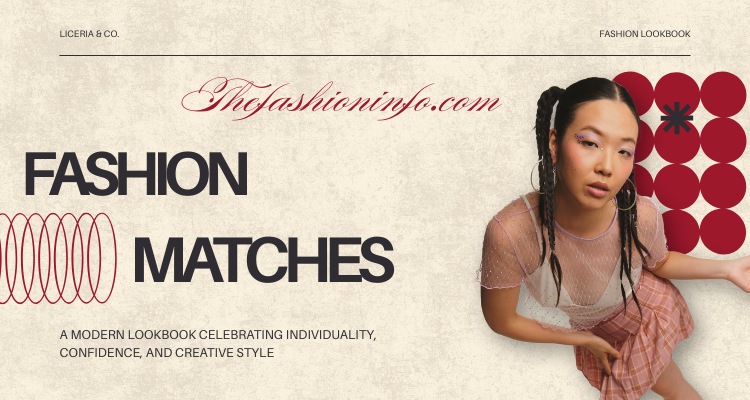
Fashion matches is a frequently explored subject in style debates, occasions where we are shopping, and in the world of digital fashion content. The term does not denote a single brand exclusively but rather refers to how garments, accessories, and styling as a whole come together in a well-orchestrated look. Its vast implication is the reason why fashion’s matches have a resonance with a varied crowd—ranging from casual buyers to fashion lovers.
This write-up sheds light on the meaning of fashion’s matches, the uses of this term, and its significance in personal style and fashion decision-making.
Table of Contents
What Does Fashion Matches Mean?
The term fashion matches is short for the coordination and agreement that is present among different items of clothing and accessories that make up an outfit. Usually, when individuals say that something “matches” in the world of fashion, their first thought is that colors, textures, styles, or proportions are in sync with each other.
The idea is relevant to:
- mixing and matching of garments
- attaching shoes and accessories to outfits
- styling according to seasons
- outfitting for occasions
Fashion’s matches are more about achieving harmony and less about sticking to the fashion rules that are considered to be standard.
Fashion Matches in Everyday Styling
Fashion’s matches help people put together outfits during everyday dressing that resemble a well-thought-out and balanced style. Here, matching means complementing each other rather than being identical.
Some sample instances are:
- Statement accessories spotlighting neutral outfits
- Color palettes that are in sync
- Mixing casual pieces with a structured look
- Footwear matching the overall vibe of an outfit
These kinds of decisions allow for an effortlessly good-looking outfit even without high-priced items.
Fashion Matches and Color Coordination
Color is at the heart of fashion’s matches. Most people turn to the basic color guidelines to fashion well-matched outfits.
Some widely practiced methods are:
- Playing with different shades of the same color
- Using neutrals as the base and bringing in accents
- Complementary or analogous color schemes
Grasping the fundamentals of color coordination takes the stress out of outfit planning and boosts self-assurance.
Texture, Fabric, and Fit Matching
Nothing is as easy as pairing colors but fashion match delve deeper and consider texture and fabric choices as well.
Examples:
- Combining the gentleness of soft fabrics with the toughness of structured materials
- Introducing light textures as a counterbalance to heavy ones
- Opting for casual fabrics in laid-back silhouettes
Fit is also a crucial factor—clothing that has proper proportions will bring out the best in the overall match, even if the outfit is a mundanity.
Fashion Matches in Online Shopping
In the e-commerce fashion world, fashion’s matches are basically:
- “Finish the look” type of advice
- Products-with-a- look images
- Outfit suggestions
Fashion retailers employ matching schemes as a tool that visually conveys to potential customers how different pieces complement each other. The end result of this strategy is a more assured customer who is less hesitant when purchasing via the internet.
Fashion Matches and Personal Style
Personal style is a significant factor that determines how different individuals interpret and define fashion match. What suits perfectly one person could be hardly acceptable for someone else.
Personal style decides:
- Color likes
- Silhouette decisions
- Use of accessories
- General look
Fashion match empower people to showcase who they are while not sacrificing the visual appeal of the outfit.
Trend Influence on Fashion Matches
What is trending at the moment has some impact on people’s understanding of matching in clothes. There are certain trends whose essence is to show boldly contrasting styles whereas there are others which focus on subdued coordination.
Examples:
- Oversized vs. slim silhouette play
- Mixing retro accessories with modern attire
- Streetwear plus classic
As styles keep revolving, so does the way in which fashion’s matches are being understood, however, at the very core, the idea of balance stays unchanged.
Fashion Matches vs Fashion Rules
Those who are fashion match oriented are not the same as those who strictly follow fashion rules. Overly rigid fashion rules cannot be broken down to a do’s and don’ts list but matching, instead, is an emphasis on visual cohesion.
Fashion Rules
- Usually limiting
- Dependent on the current trend
- General advice that is supposedly suitable for everyone
Fashion Matches
- Open to changes
- One’s own
- Compatible with different fashion styles
This flexibility makes fashion’s matches more practical for everyday wear.
Why Fashion Matches Matter
Fashion’s matches matter because they:
-
Improve outfit confidence
-
Simplify styling decisions
-
Enhance overall appearance
-
Support personal expression
Well-matched outfits often look more intentional, even when built from basic pieces.
Content and Media
Fashion blogs, social media, and style platforms frequently use the concept of matching to engage audiences. Outfit breakdowns, styling tips, and visual guides often revolve around how pieces match together.
This makes fashion’s match a strong topic for lifestyle and fashion-focused content.
Final Thoughts
Fashion match represent a foundational idea in style—how individual pieces come together to form a complete look. The concept remains relevant because it adapts easily to trends, personal preferences, and different fashion levels.
Whether applied to daily outfits or digital fashion inspiration, fashion’s matche help people navigate style with confidence and creativity.
FAQs
Is fashion matches a brand?
No, it is a general fashion term related to styling and coordination.
Do fashion matches require following trends?
No, matching works independently of trends.
Can fashion matches be subjective?
Yes, personal taste strongly influences what matches well.
Are fashion matches important for casual wear?
Yes, even simple outfits benefit from thoughtful matching.