
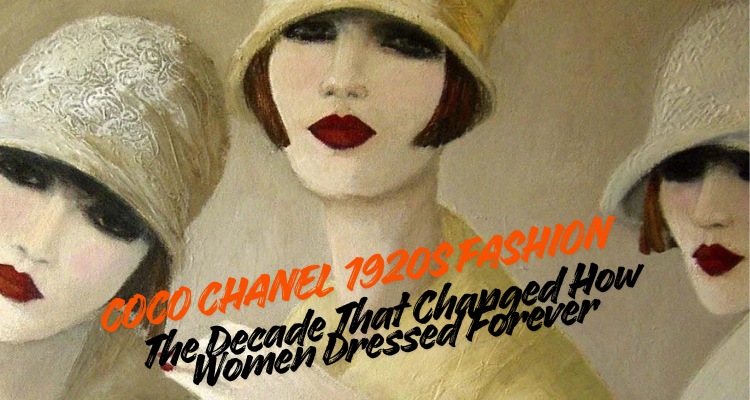
When people search for coco chanel 1920s fashion, they’re not looking for a full biography or a brand overview. They want to understand what Chanel did in the 1920s, why that decade mattered, and how her designs changed women’s clothing permanently.
This article is era-specific and style-focused.
Not the fashion house.
Not later decades.
Just the 1920s—and why it was revolutionary.
Table of Contents
Coco Chanel and the 1920s Context
The 1920s were a breaking point in fashion history. After World War I, society shifted fast—social rules loosened, women gained independence, and traditional dress codes started to feel outdated.
Into this moment stepped Coco Chanel, offering something radical for the time: freedom through clothing.
Before Chanel, women’s fashion relied on:
-
Corsets
-
Heavy fabrics
-
Decorative excess
-
Restrictive silhouettes
Chanel’s 1920s fashion rejected all of that.
What Defined Coco Chanel 1920s Fashion
Coco Chanel 1920s fashion was built on one central idea: comfort equals confidence.
Key characteristics included:
-
Straight, boyish silhouettes
-
Dropped waistlines
-
Lightweight fabrics like jersey
-
Minimal ornamentation
-
Neutral and muted color palettes
Her designs aligned perfectly with the rise of the modern woman—active, independent, and socially visible.
This wasn’t fashion meant to impress others. It was fashion meant to serve the wearer.
Chanel and the Flapper Movement
While Chanel didn’t invent the flapper style, she refined it.
Her 1920s designs matched the flapper spirit:
-
Shorter hemlines
-
Looser dresses
-
Freedom of movement
-
A rejection of Victorian femininity
Chanel’s version was less theatrical and more wearable. She stripped the look down to its essentials, making it elegant rather than costume-like.
This balance is why her influence outlasted the decade.
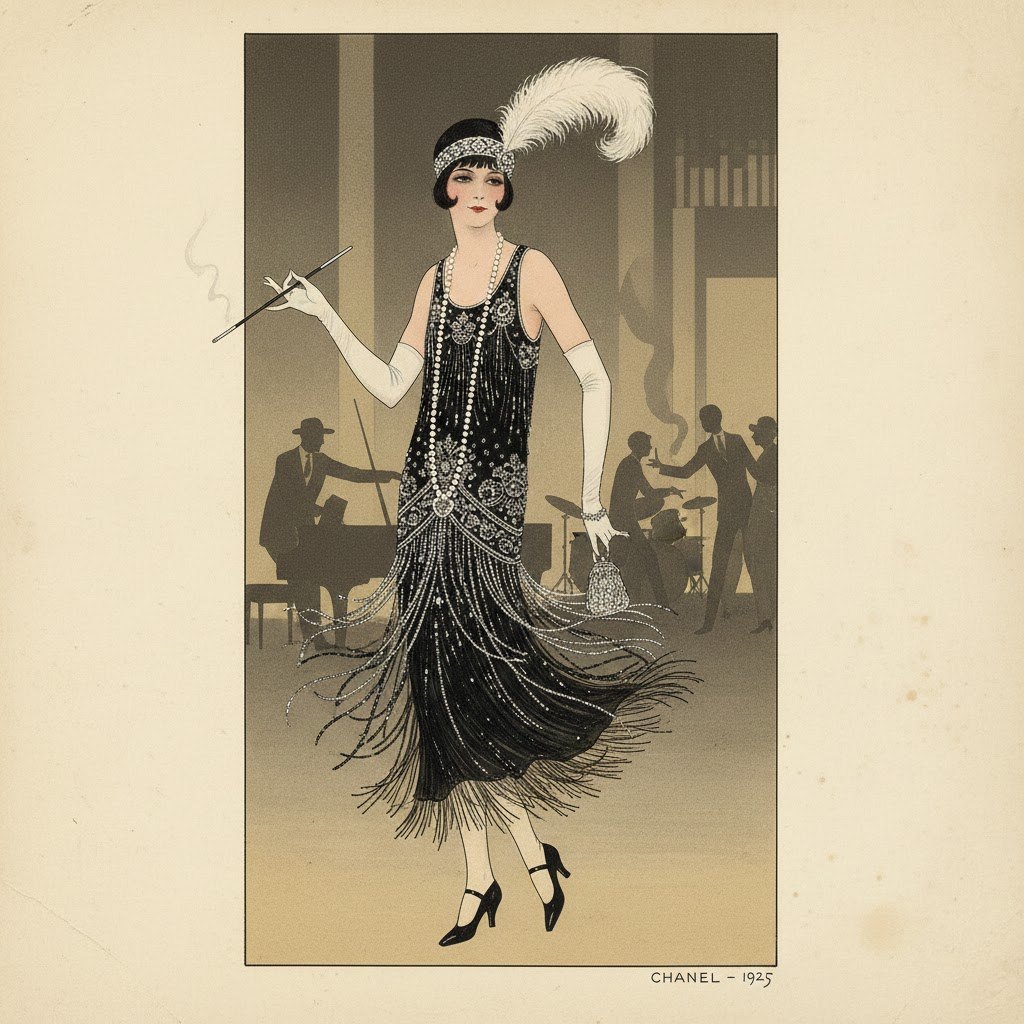
The Little Black Dress in the 1920s
One of the most powerful contributions of Coco Chanel 1920s fashion was the little black dress.
Before Chanel:
-
Black was associated with mourning
-
It wasn’t considered fashionable for everyday wear
Chanel flipped that idea completely.
Her simple black dress design in the 1920s proved that:
-
Elegance didn’t require decoration
-
Black could be modern and versatile
-
Simplicity could be revolutionary
This single concept became a permanent pillar of women’s fashion.
Fabrics, Fit, and Function
Chanel’s use of jersey fabric was another quiet revolution.
At the time, jersey was considered:
-
Too casual
-
Too masculine
-
Unsuitable for luxury
Chanel ignored those assumptions. She chose jersey because it moved with the body and felt comfortable. In the 1920s, that choice symbolized freedom more than any silhouette.
Coco Chanel 1920s fashion wasn’t about looking rich. It was about living freely.
How Chanel Redefined Femininity in the 1920s
Traditional femininity before the 1920s emphasized:
-
Curves
-
Decoration
-
Restriction
Chanel offered an alternative:
-
Clean lines
-
Relaxed fits
-
Subtle elegance
She didn’t remove femininity—she redefined it. Her designs allowed women to participate fully in modern life without sacrificing style.
That idea still shapes women’s fashion today.
Accessories and Styling in Chanel’s 1920s Looks
Accessories played a strategic role in Coco Chanel 1920s fashion.
Instead of heavy embellishment, she used:
-
Long pearl necklaces
-
Simple hats
-
Minimal jewelry
Accessories added personality without overwhelming the outfit. This styling approach emphasized balance, not excess.
Cultural Impact of Coco Chanel 1920s Fashion
Chanel’s 1920s work didn’t just influence fashion—it reflected broader social change.
Her clothing aligned with:
-
Women entering the workforce
-
Changing gender roles
-
A shift toward practicality
Fashion became a tool for independence rather than decoration. That cultural alignment is why Chanel’s influence feels timeless.
Coco Chanel 1920s Fashion vs Earlier Eras
Compared to pre-1920s fashion:
-
Corsets disappeared
-
Movement became essential
-
Decoration was reduced
-
Comfort became fashionable
This shift wasn’t gradual. It was dramatic. Chanel didn’t tweak fashion—she replaced its foundation.
Why Coco Chanel 1920s Fashion Still Matters
Coco Chanel 1920s fashion matters because it:
-
Set the template for modern women’s clothing
-
Proved simplicity could be powerful
-
Made comfort a fashion value
Nearly every minimalist trend today traces back to this decade.
Final Thoughts
Coco Chanel fashion wasn’t about trends.
It was about liberation through design.
She removed restrictions, simplified silhouettes, and allowed women to move freely—physically and socially.
Fashion has evolved, but the principles Chanel introduced in the 1920s still define modern style.
That’s not nostalgia.
That’s impact.