
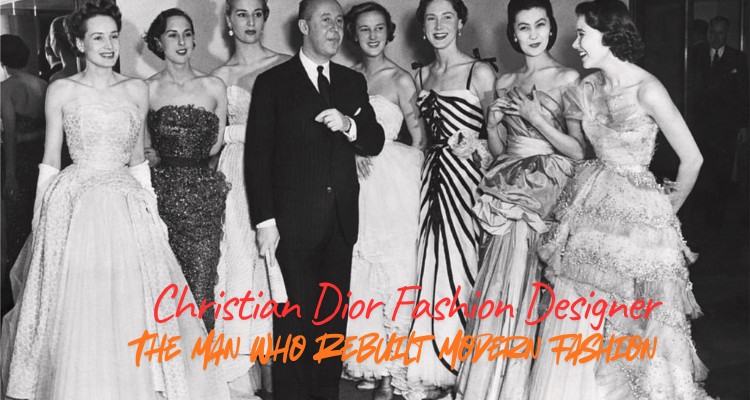
When people search for Christian Dior, they are seeking the man behind the legacy—not the corporate fashion house that followed. This article is biography-driven and authority-focused, examining Dior as a designer, his creative mindset, and his historical significance. It does not address brand operations, business expansion, or modern management. The focus is singular and intentional: the creator himself.
Table of Contents
Who Was Christian Dior?
Christian Dior was a French fashion designer who changed the direction of fashion at a moment when the world desperately needed beauty again.
He wasn’t loud. He wasn’t rebellious in the modern sense. Dior’s power came from precision, structure, and an almost architectural understanding of femininity.
At a time when clothing was shaped by war-time scarcity, Christian Dior reintroduced elegance, volume, and grace—resetting how women dressed and how designers thought about silhouettes.
Christian Dior Before Fame
Before becoming the Christian Dior the world remembers, his life took several unexpected turns.
He was deeply interested in:
-
Art and architecture
-
Culture and aesthetics
-
Structure and balance
Fashion was not his first obsession, but it became his most powerful medium.
Financial hardship, personal loss, and instability shaped his worldview. These experiences influenced his later designs, which emphasized security, beauty, and controlled luxury rather than chaos.
Christian Dior designed with intention, not impulse.
The Breakthrough That Changed Fashion History
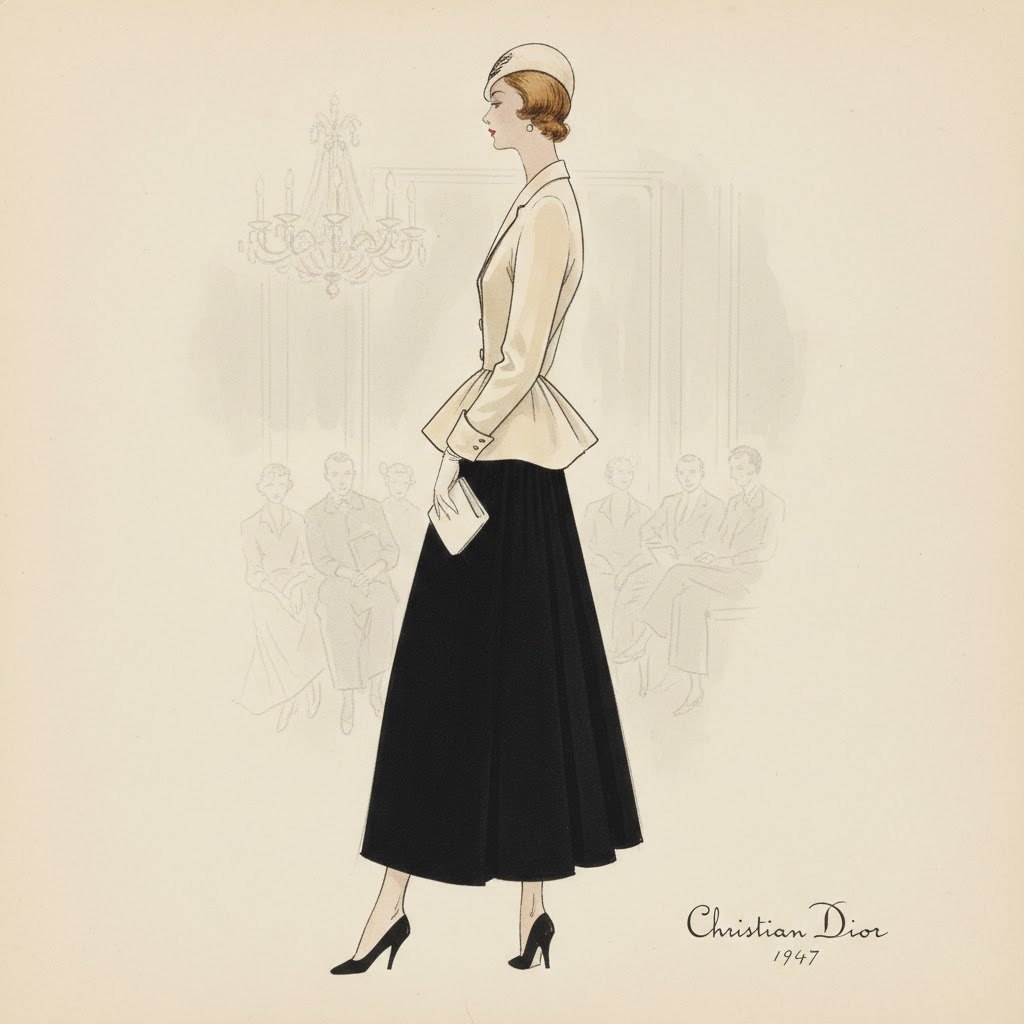
Christian Dior’s defining moment came with his first major collection in 1947.
The designs introduced:
-
Narrow shoulders
-
Cinched waists
-
Full, flowing skirts
-
Soft, elegant lines
This was the opposite of wartime fashion. It was bold, expensive to produce, and unapologetically feminine.
The reaction was immediate and global. Fashion critics recognized it as a turning point. Women embraced it as liberation. Paris reclaimed its place as the center of haute couture.
Design Philosophy of Christian Dior
Christian Dior believed fashion should enhance a woman’s presence, not overpower it.
His design philosophy centered on:
-
Structure over excess
-
Elegance over trend
-
Timeless beauty over novelty
He often compared fashion to architecture. Every seam had a purpose. Every silhouette was calculated.
Unlike many designers who chased change, Dior focused on refinement. His designs weren’t meant to shock. They were meant to endure.
Christian Dior and the Revival of Haute Couture
Christian Dior didn’t just design clothes—he revived haute couture.
At a time when couture seemed outdated and impractical, he proved that craftsmanship still mattered. His success showed that:
-
Handwork had value
-
Luxury had cultural power
-
Parisian couture could lead again
His work restored confidence in fashion as an art form, not just a business.
Personal Character and Creative Mindset
Christian Dior was known as:
-
Private
-
Superstitious
-
Deeply thoughtful
He trusted rituals, symbolism, and intuition. This inner world influenced his collections more than trends ever did.
Unlike designers who positioned themselves as celebrities, Dior remained focused on the work. His humility contrasted sharply with the global impact of his creations.
That quiet confidence defined him.
Short Career, Massive Impact
Christian Dior’s career as a leading designer was relatively short, yet his impact was enormous.
In just a few years, he:
-
Redefined women’s fashion
-
Restored Paris’s fashion dominance
-
Created a design language that still influences luxury fashion
Few designers achieve that level of transformation in a lifetime—Dior did it in a decade.
Christian Dior’s Lasting Influence
The influence of Christian Dior continues through:
-
Silhouette standards
-
Couture craftsmanship
-
Luxury brand discipline
-
Feminine elegance as power
Even today, fashion schools teach principles rooted in Dior’s approach to balance, form, and construction.
His ideas didn’t age because they were never trend-based to begin with.
Christian Dior vs Modern Fashion Designers
Modern fashion often prioritizes:
-
Speed
-
Virality
-
Shock value
Christian Dior represented the opposite:
-
Patience
-
Structure
-
Longevity
That contrast is exactly why his legacy feels stronger with time. In an industry chasing attention, Dior stands as proof that restraint can be revolutionary.
Why Christian Dior Still Matters Today
Christian Dior matters because he:
-
Rebuilt fashion after global collapse
-
Defined luxury without excess noise
-
Created designs that respected women’s form and presence
His work reminds the fashion industry that elegance is not weakness—and tradition is not limitation.
Final Thoughts
Christian Dior fashion designer is not remembered because of hype.
Christian Dior is remembered for permanently changing the rules of fashion, restoring beauty when it was missing, structure when it was lost, and creating a foundation that designers still stand on today. While trends continue to rotate, the influence of Dior remains fixed in fashion history.
Trends will always rotate.
The influence of Christian Dior is fixed in fashion history.