
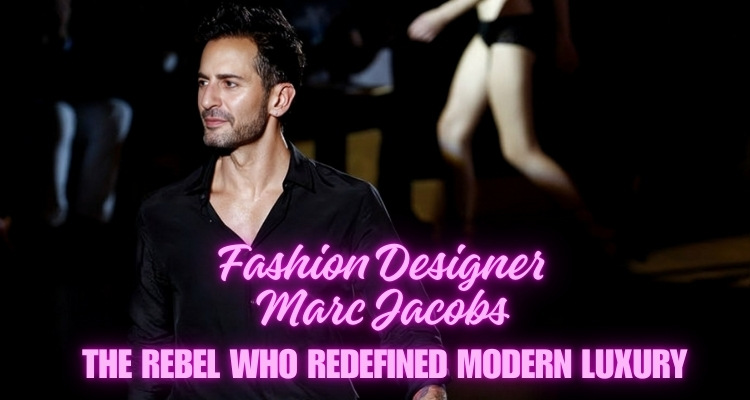
When people search for fashion designer Marc Jacobs, they’re not looking for a shopping list or runway specs. They’re trying to understand who he is, what he represents, and why his name still matters in fashion culture. This article is built exactly for that intent—designer-first, brand-aware, and legacy-focused.
Marc Jacobs is one of those rare figures who didn’t just succeed in fashion; he reshaped its attitude. At a time when luxury fashion was stiff, distant, and overly polished, he injected emotion, rebellion, and real-world chaos into high fashion—and made it work.
Table of Contents
Who Is Fashion Designer Marc Jacobs?
Fashion designer Marc Jacobs is an American designer known for challenging traditional ideas of luxury while still mastering them. He belongs to a small group of designers who understand classic fashion deeply—but aren’t afraid to disrupt it.
Born and raised in New York City, Marc Jacobs absorbed the city’s contradictions early on: elegance mixed with grit, creativity mixed with pressure. That duality became the backbone of his design identity.
He didn’t come into fashion as an outsider guessing his way through. He was trained, disciplined, and serious about craft. What made him different was his refusal to treat fashion as untouchable.
Early Career and Creative Foundation
Marc Jacobs’ early years in fashion were marked by discipline and ambition. He learned tailoring, garment construction, and fashion theory the traditional way—through education and hands-on work.
But even early collections hinted at something different. There was always an edge. A sense that the clothes were responding to culture, not just trends.
This foundation matters because it explains why his later rule-breaking worked. He wasn’t rebelling out of ignorance. He was rebelling from knowledge.
That distinction separates lasting designers from short-lived disruptors.
The Designer Who Brought Reality Into Luxury
Before fashion designer Marc Jacobs, luxury fashion lived in a bubble. It was elegant, yes—but disconnected from everyday life. Marc Jacobs changed that.
He introduced:
-
Street influence into high fashion
-
Imperfection as an aesthetic
-
Youth culture as a legitimate design reference
His collections often felt emotional rather than ornamental. They reflected anxiety, nostalgia, rebellion, and sometimes discomfort. That honesty made his work stand out.
This approach confused traditionalists but attracted a new audience—people who wanted fashion to feel human, not ceremonial.
Defining the Marc Jacobs Fashion Style
The fashion style of Marc Jacobs doesn’t fit neatly into one category, and that’s intentional.
Common elements include:
-
Oversized or exaggerated silhouettes
-
Layering that feels unpolished on purpose
-
Gender-fluid styling long before it was mainstream
-
A mix of vintage references with modern attitude
-
Bold statements balanced with irony
Rather than chasing seasonal trends, fashion designer Marc Jacobs builds collections around mood and meaning. That’s why his work often sparks conversation instead of silent approval.
Reinventing Luxury From the Inside
One of the most important chapters in the career of fashion designer Marc Jacobs was his long tenure as a creative leader at a major luxury fashion house.
During this era, luxury fashion changed direction:
-
Logos became playful instead of restrained
-
Collaborations entered the mainstream
-
Runway shows became cultural events
Luxury stopped whispering and started speaking louder.
Marc Jacobs understood that history alone couldn’t keep luxury relevant. Culture had to be part of the conversation.
Many luxury brands today still follow strategies that became normal during this period.
Marc Jacobs and Youth Culture
Fashion designer Marc Jacobs has always paid attention to youth—not as a marketing demographic, but as a cultural force.
He draws inspiration from:
-
Music scenes
-
Art movements
-
Street style
-
Emotional shifts in society
Instead of copying trends, he translates energy into design. That’s why his work appeals across generations. Older audiences see craftsmanship. Younger audiences see honesty and freedom.
He doesn’t clean up rebellion. He presents it as it is.
Balancing Creativity and Commercial Success
One of the hardest things in fashion is scaling without losing identity. Marc Jacobs managed this better than most.
His brand operates across:
-
High-fashion runway collections
-
Accessible fashion lines
-
Accessories and lifestyle products
The key is consistency of attitude. Even commercial pieces still feel like Marc Jacobs—playful, ironic, confident, and slightly offbeat.
Fashion designer Marc Jacobs proves that creativity and business don’t have to cancel each other out if the core identity stays intact.
Personal Struggles and Honest Expression
Marc Jacobs has never hidden behind a flawless image. He has been open about personal struggles, creative pressure, and burnout.
That honesty shows up in his work. Some collections feel introspective. Others feel chaotic. But none feel fake.
In an industry obsessed with perfection, this vulnerability adds credibility. It reminds people that fashion is created by humans, not machines.
Criticism and Controversy
Not everyone connects with the work of fashion designer Marc Jacobs—and that’s expected.
Common criticisms include:
-
Collections that feel inconsistent
-
Designs that prioritize concept over wearability
-
A refusal to play it safe
But safe designers rarely change industries.
Marc Jacobs has always accepted that pushing boundaries comes with backlash. That willingness to take risks is exactly why his name still carries weight.
The Marc Jacobs Brand Today
Today, fashion designer Marc Jacobs represents a unique position in the fashion world.
The brand is:
-
Recognizable but not rigid
-
Accessible but not generic
-
Experimental without losing credibility
It appeals to people who love fashion but don’t worship tradition blindly. People who value history but want room to evolve.
That balance is hard to maintain—and rare.
Legacy of Fashion Designer Marc Jacobs
The influence of fashion designer Marc Jacobs is everywhere:
-
The rise of “ugly-chic” aesthetics
-
The blending of luxury and street culture
-
Emotion-driven fashion storytelling
-
Acceptance of imperfection as style
Many modern designers operate in a landscape he helped shape, whether they admit it or not.
He didn’t just design clothes. He shifted how fashion thinks.
Why Fashion Designer Marc Jacobs Still Matters
Fashion moves fast. Trends disappear overnight. Designers fade quietly.
Marc Jacobs didn’t.
He still matters because:
-
He evolves without erasing his identity
-
He respects fashion history without being trapped by it
-
He designs from emotion, not formulas
Old-school training. Forward-thinking mindset. Zero fear of criticism.
That combination doesn’t age.
Final Thoughts
Fashion designer Marc Jacobs is not for everyone—and that’s exactly why he matters.
He represents fashion that is:
-
Honest
-
Emotional
-
Imperfect
-
Thoughtful
In a world filled with trend-chasing and over-polished design, Marc Jacobs stands as proof that authenticity outlasts hype.
Trends will come and go.
The impact of fashion designer Marc Jacobs is already permanent.